
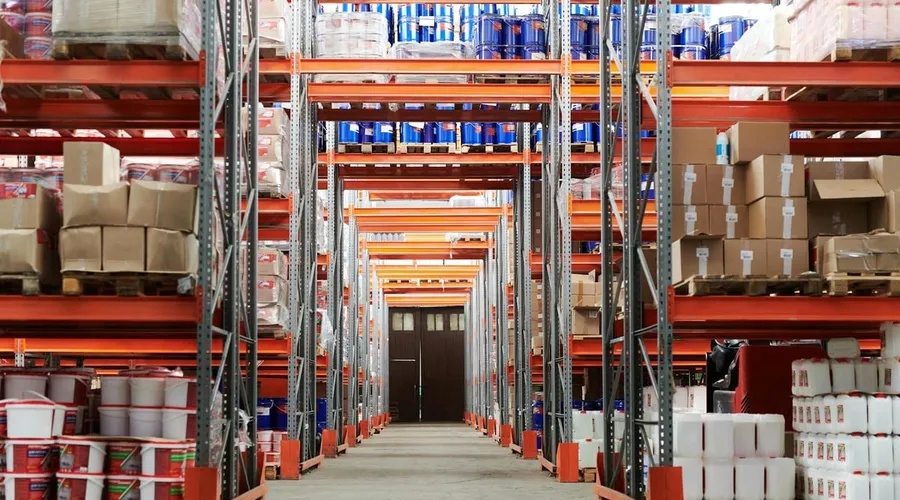
Rajesh Kulkarni, the owner of Anjur Storage Works, had fifteen thousand square feet available in Bhiwandi on Tuesday morning. The warehouse had been swept, the shutters worked, and a 40-foot container truck could reach the loading area without reversing through the whole compound.
Anjur Storage Works has been in business for eleven years. Its facility covers roughly forty thousand square feet across three warehouse buildings, with a weighbridge at the gate and Rajesh’s mobile number painted on the wall.
That same morning, Nikhil Bhagat, the logistics manager for a Mumbai apparel company, needed about fifteen thousand square feet in Bhiwandi for ninety days. He opened Google before he called a broker.
The search gave him logistics park pages and property listings with little more than an address and phone number. Rajesh’s warehouse was not among them.
The space existed. The requirement existed. The information connecting them did not.
Finding a godown still means making one call after another
Nikhil could still find a warehouse the old way. He could call someone who knew Bhiwandi, take another number, speak to a sub-broker and begin visiting compounds.
That chain is useful when the information lives nowhere else. The broker may know which warehouse has space available, whether a 40-foot container truck can use the approach road and whom to call for the keys. The buyer has to trust each answer until a visit proves it.
The first warehouse may have a ceiling that is too low. At the second, part of the quoted area may not be usable. The third may fit, but Nikhil has already spent most of the day on site visits.
Every serious question about Rajesh’s warehouse has an answer. Nikhil’s problem is that he must find Rajesh and make the call before he can hear any of them.
A growing market still leaves some warehouses out
Warehousing transactions across India’s eight primary markets reached 7.25 crore square feet in 2025, 29% higher than the year before, according to Knight Frank India.
For Rajesh, that growth matters only if a buyer knows his warehouse exists. When Nikhil searches online, other warehouses can be considered while Rajesh’s is missed.
Rajesh may get enquiries from customers and brokers who already know him. A buyer looking in Bhiwandi for the first time may have none of those contacts. Without an introduction or information online, that buyer may never hear about Rajesh’s warehouse.
When a buyer depends entirely on a broker for information, the broker decides which warehouses get considered.
What does a warehouse buyer need before calling?
At the start of a search, Nikhil does not need a drone video or a polished company history. He is trying to rule out unsuitable sites before spending a day visiting them.
For Rajesh’s facility, that means six practical answers:
-
Location and access: the exact location pin, a landmark drivers recognise, the approach road and whether a 40-foot container truck can enter.
-
Usable space and specifications: available area, clear height, floor load capacity, column spacing and any obstruction that affects storage.
-
Loading and equipment: the number of loading docks, space for loading and unloading, a weighbridge, forklifts and other material handling equipment.
-
Power and utilities: sanctioned power load, backup power, water and any temperature-control facility.
-
Compliance: the fire NOC, where required, and other approvals or certificates held by the facility, with enough detail for the buyer to check what applies.
-
Availability and contact: which warehouse has space available, from when, for how long, and the name of the person who can arrange a site visit.
Those six answers are in Rajesh’s head, old PDFs and WhatsApp messages. He needs to confirm the details before they are published together. When space is rented out, the area shown as available must change too. Otherwise, the next buyer may call about space that is no longer free.
Nikhil, the buyer, is deciding which warehouses to visit. Rajesh, the warehouse owner, needs to give him enough information to make that choice. Warehouse owners need a way to keep those details online while they get on with running the business.
Who keeps the warehouse information in order?
Someone has to describe the warehouse’s available space, loading facilities and truck access clearly, confirm the details with the owner and update them when they change.
A warehouse owner should not have to coordinate a writer, a web developer and someone else managing the company data for every update. The information needs to be managed together.
NH44 helps buyers understand what a warehouse offers before they call. We organise the details the owner provides for publication into one company record. Buyers can read about the warehouse on its website or ask NH44 Intelligence about its space, facilities and services.
We manage the content and technology, and update both the published details and the information used for answers when the owner sends a change. Buyers still need to confirm availability and terms directly with the warehouse.
If buyers still need an introduction to find your warehouse, book a 30-minute call with NH44. We’ll discuss what your business needs to publish and how our team can manage it for you.
The warehouse was ready before the search began
Back in Bhiwandi, Rajesh’s fifteen thousand square feet matched the size and location Nikhil was searching for. The buyer still needed to inspect the warehouse and agree on rent. But Rajesh’s warehouse never reached Nikhil’s list of places to visit.
Rajesh had space to offer. Nikhil never saw enough information to consider it.